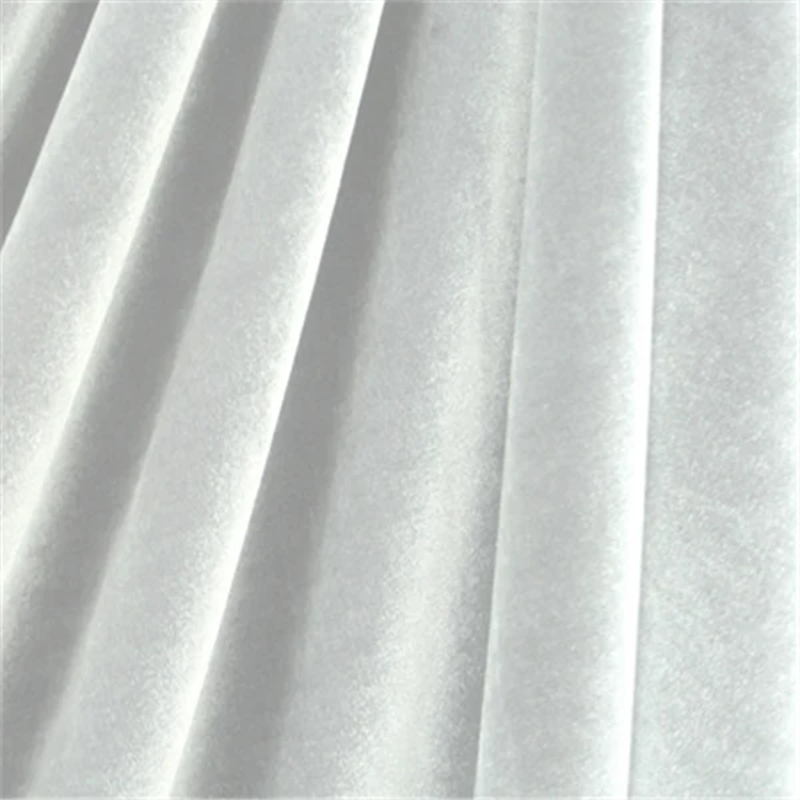
Technical Requirements for Stretch Fabric
Mar 20, 2026
Leave a message
Stretch fabric, which contains elastic fibers such as spandex, Lycra, or elastic polyester, requires precise production processes to maintain its unique stretch and recovery properties. Proper control ensures fabric quality, elasticity, comfort, and aesthetic appeal. The main technical requirements are as follows:
Yarn Selection
High-quality stretch fabric depends on the material and specifications of the yarn. Base fibers such as cotton, polyester, or nylon should be blended appropriately with elastic fibers to ensure uniform elasticity, softness, smooth hand feel, and durability. Yarn strength and fiber length must be adequate to prevent breakage or deformation during stretching.
Knitting or Weaving Process Control
Knitted Stretch Fabric: Precise control of stitch density, stitch type, yarn tension, and knitting speed is required to ensure uniform thickness, stable elasticity, and good recovery. Different stitch patterns (single-knit, double-knit, rib, mesh) require different parameter adjustments.
Woven Stretch Fabric: With lower elastic fiber content, tension in the warp or weft must be controlled to provide moderate stretch while maintaining stability and durability.
Elastic Fiber Handling
Elastic fibers are sensitive to heat and excessive stretching. Pre-stretching of yarn, tension control during weaving or knitting, and post-weaving setting are crucial to maintain fiber performance.
Finishing Processes
After weaving or knitting, stretch fabrics usually undergo setting, softening, dyeing, or printing. Finishing must be carried out at appropriate temperatures to prevent fiber damage or loss of elasticity, while ensuring the fabric is flat, soft, and color-consistent.
Quality Inspection
Strict inspection of thickness, elasticity, recovery, surface defects, color fastness, and dimensional stability is necessary. For high-elasticity fabrics, stretch ratio and recovery should be carefully checked to ensure the finished product performs well during wear.
Environmental and Safety Compliance
Modern production must meet environmental and safety standards, such as controlling harmful substances in dyes and auxiliaries, ensuring fabrics comply with national or international textile safety regulations.
In summary, the technical requirements for stretch fabric cover yarn selection, knitting or weaving process control, elastic fiber handling, finishing, quality inspection, and environmental compliance. Strict adherence ensures elasticity, softness, durability, and aesthetic quality, meeting the diverse demands of apparel and functional textiles.