

How to improve the elasticity recovery of knitted fabric?
Oct 20, 2026
Leave a message
Hey there! As a supplier of knitted fabric, I've been getting a lot of questions lately about how to improve the elasticity recovery of knitted fabric. It's a crucial aspect, especially for those who use our fabrics in making sportswear, activewear, and other stretchy garments. So, I thought I'd share some tips and insights based on my experience in the industry.

Understanding Elasticity Recovery in Knitted Fabrics
First things first, let's talk about what elasticity recovery actually means. Elasticity recovery refers to the ability of a knitted fabric to return to its original shape after being stretched. When a fabric has good elasticity recovery, it can withstand repeated stretching and still maintain its form, which is super important for the longevity and fit of the garments made from it.
There are a few factors that can affect the elasticity recovery of knitted fabric. One of the main factors is the type of fibers used. For example, natural fibers like cotton have some elasticity, but it's not as high as synthetic fibers like spandex or elastane. Spandex is known for its excellent stretch and recovery properties, which is why it's often blended with other fibers to improve the elasticity of knitted fabrics.
Another factor is the knitting structure. Different knitting patterns can have different levels of stretch and recovery. For instance, a rib knit has more stretch in one direction compared to a jersey knit. The way the yarns are interlaced also plays a role in how the fabric behaves when stretched.
Choosing the Right Fibers
As I mentioned earlier, the choice of fibers is crucial when it comes to improving elasticity recovery. If you're looking for a fabric with high elasticity, I'd recommend considering blends that include spandex or elastane. These synthetic fibers can add a significant amount of stretch and recovery to the fabric.
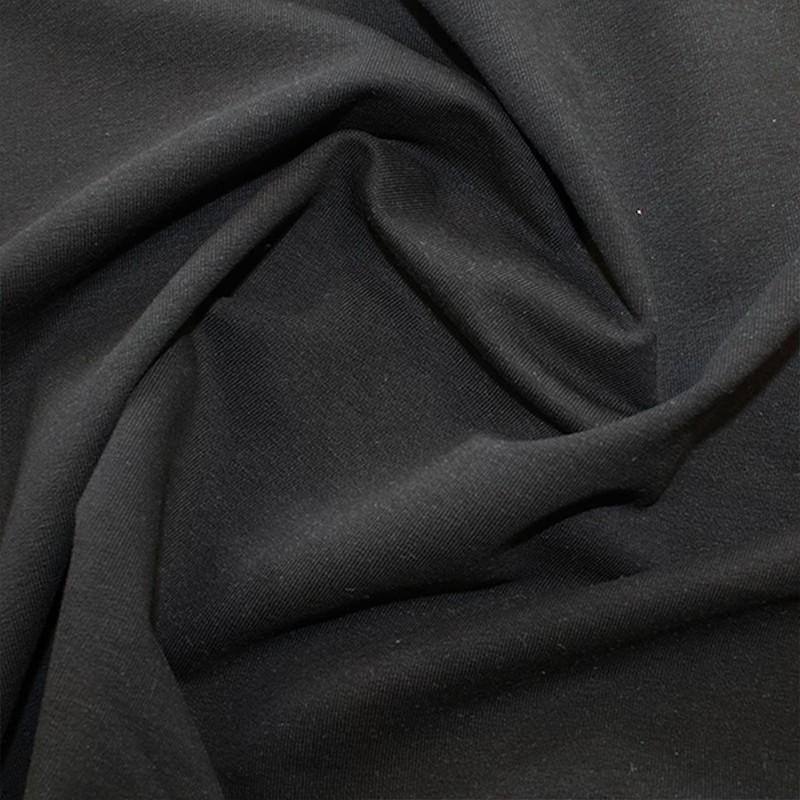
For example, our Black Jersey Knit Fabric is a popular choice among our customers. It's a blend of cotton and spandex, which gives it a soft feel and good stretch. The spandex helps the fabric to recover quickly after being stretched, making it ideal for form-fitting garments.
If you're more into natural fibers, we also have Organic Knit Fabric. While it may not have the same level of elasticity as a spandex blend, it still has some stretch and is a great option for those who prefer eco-friendly materials. You can also look for organic fabrics that are blended with a small amount of spandex to improve their elasticity recovery.
Optimizing the Knitting Process
The knitting process itself can also have a big impact on the elasticity recovery of the fabric. Here are some tips to optimize the knitting process:
- Choose the right knitting machine: Different knitting machines can produce different knitting structures. Make sure you choose a machine that is suitable for the type of fabric you want to produce. For example, a circular knitting machine is often used for making tubular fabrics, while a flat knitting machine is better for making flat pieces.
- Adjust the tension: The tension of the yarn during the knitting process can affect the stretch and recovery of the fabric. If the tension is too tight, the fabric may be less stretchy and have a harder time recovering. On the other hand, if the tension is too loose, the fabric may be too stretchy and lose its shape easily. Experiment with different tension settings to find the optimal one for your fabric.
- Use the right needle size: The needle size can also impact the fabric's properties. A smaller needle size will produce a tighter fabric with less stretch, while a larger needle size will result in a looser fabric with more stretch. Choose the needle size based on the type of yarn and the desired stretch of the fabric.
Post-Treatment Processes
After the fabric is knitted, there are some post-treatment processes that can be used to improve its elasticity recovery. Here are a few common methods:
- Heat setting: Heat setting is a process where the fabric is exposed to high temperatures to set the shape and improve its elasticity recovery. This process can help to lock in the stretch and make the fabric more stable. It's often used for fabrics that contain spandex or elastane.
- Dyeing and finishing: The dyeing and finishing processes can also affect the elasticity recovery of the fabric. Some dyes and finishes can make the fabric stiffer or more brittle, which can reduce its stretch and recovery. Make sure you choose dyes and finishes that are compatible with the fabric and won't have a negative impact on its properties.
- Relaxation: Relaxing the fabric after knitting can also help to improve its elasticity recovery. This can be done by washing the fabric in a gentle cycle and allowing it to air dry. The relaxation process can help to release any tension in the fabric and make it more comfortable to wear.
Testing and Quality Control
It's important to test the elasticity recovery of your knitted fabric before using it in production. There are several methods that can be used to test the elasticity of a fabric, such as the tensile test and the stretch and recovery test. These tests can help you to determine the stretch and recovery properties of the fabric and ensure that it meets your requirements.
In addition to testing, it's also important to have a quality control process in place to ensure that the fabric is consistent and meets the desired standards. This can include inspecting the fabric for defects, checking the yarn quality, and monitoring the knitting process.
Conclusion
Improving the elasticity recovery of knitted fabric is a combination of choosing the right fibers, optimizing the knitting process, and using post-treatment processes. By following these tips, you can produce high-quality knitted fabrics that have excellent stretch and recovery properties.
If you're interested in purchasing our knitted fabrics or have any questions about improving elasticity recovery, feel free to reach out to us. We'd be happy to help you find the right fabric for your needs and provide you with more information.
References
- Textile Institute. (2019). Handbook of Textile Fibre Structure. Woodhead Publishing.
- Morton, W. E., & Hearle, J. W. S. (2008). Physical Properties of Textile Fibres. Woodhead Publishing.
- Postle, R. (2001). The Handbook of Knitting Technology. Woodhead Publishing.